How SlimLine Tunnel Pasteurizers Improve Lean Manufacturing and Sustainable Beverage Production
Presented by PRO Engineering / Manufacturing Inc. A leading U.S. manufacturer of tunnel and batch pasteurization systems for the global beverage industry. With decades of experience designing energy-efficient, precision-controlled pasteurizers, PRO helps beverage brands safely scale production while preserving product quality, flavor, and functional integrity.
Overview Summary
Beverage manufacturers today are getting squeezed from multiple directions at once, rising energy costs, tightening sustainability expectations, and production facilities that weren’t designed with room to spare. Throughput alone doesn’t win anymore. Efficiency does.
SlimLine Tunnel Pasteurizers from PRO Engineering / Manufacturing Inc. are built for exactly this environment. They deliver the reliable thermal processing performance that commercial beverage production demands, in a compact footprint that fits where larger systems simply can’t, while consuming meaningfully less energy and water in the process.
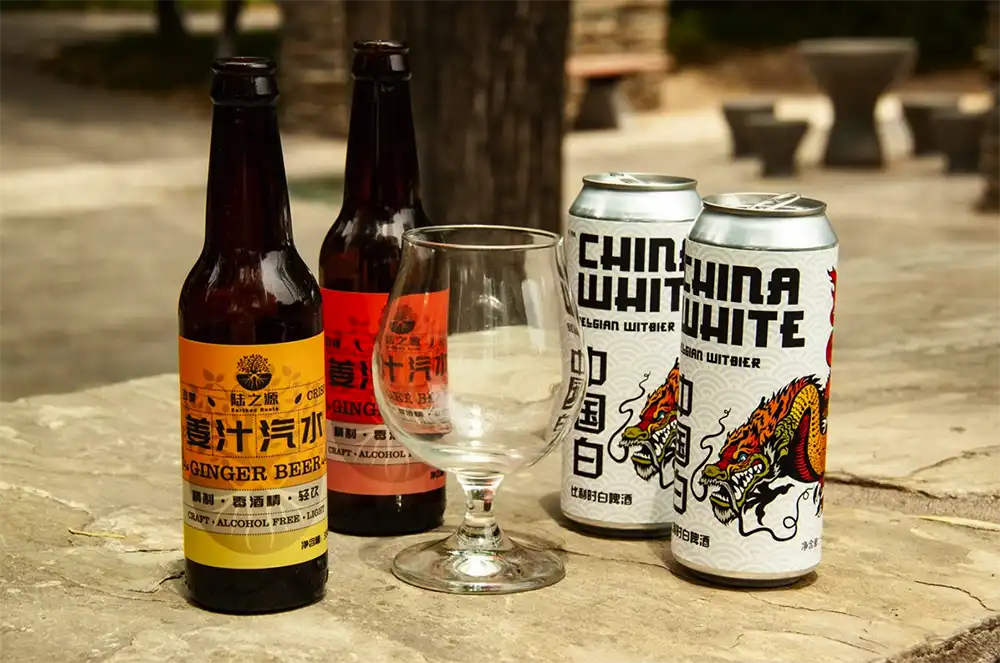
Whether you’re producing craft beer, carbonated soft drinks, hard seltzers, functional beverages, or ready-to-drink cocktails, compact pasteurization technology gives growing brands the operational flexibility to compete without the capital burden of facility expansion.
Table of Contents
Introduction
Beverage production has always been a business of tight margins and relentless operational pressure. But something has changed in the past few years that’s reshaping how forward-thinking manufacturers approach equipment decisions.
It used to be that a pasteurization system was evaluated almost entirely on throughput and reliability. Could it handle the volume? Did it keep product safe? Those questions still matter, they’ll always matter, but they’re no longer the whole conversation.
Today, a beverage producer evaluating pasteurization equipment is asking a different set of questions alongside the traditional ones. How much floor space does it consume? What does it cost to run per unit of production? How does it fit into our sustainability commitments? Can we integrate it into an existing line without a facility overhaul?
Those questions reflect a genuine shift in what defines a well-run beverage operation. Facilities are more constrained. Energy costs are higher. Retail partners are asking about environmental footprint. And growth-stage brands, the craft breweries, hard seltzer producers, and functional beverage companies driving some of the most interesting category expansion in the market, are often working in spaces that weren’t purpose-built for beverage manufacturing at scale.
SlimLine Tunnel Pasteurizers from PRO Engineering / Manufacturing Inc. were designed with all of this in mind. They represent what happens when you engineer a tunnel pasteurization system specifically for lean, efficient, space-conscious production, without making any concessions on the thermal processing performance that product safety and shelf stability require.
This article explains why that combination matters, who benefits most from it, and what it looks like in practice across different beverage production environments.
Why Efficiency Has Become the Defining Competitive Advantage
For a long time, the beverage production conversation was almost entirely about volume. How much can we make? How fast can we run the line? How do we add capacity?
That conversation has shifted, and not gradually. Rising utility costs, sustainability pressure from retailers and investors, and the practical reality of producing in facilities that weren’t designed for today’s SKU complexity have forced manufacturers to think differently. The question isn’t just how much anymore. It’s how efficiently.
This is where equipment design becomes a genuine competitive differentiator. The right tunnel pasteurization system doesn’t just protect product, it does it without burning unnecessary energy, wasting water, or consuming floor space that could be doing something more productive.
What Lean Manufacturing Actually Means in a Beverage Plant
Lean manufacturing gets thrown around a lot, but in a beverage production context it has a specific and practical meaning: maximize value output while minimizing resource input. That covers energy consumption, water usage, labor efficiency, downtime, and the square footage your equipment occupies.
The goal of lean beverage production isn’t to produce less, it’s to produce smarter. And the manufacturers who’ve built operations around that principle tend to see the results in their operating cost structure, their equipment utilization rates, and ultimately their margins.
For most beverage facilities, the pathway to leaner operations runs directly through equipment selection. You can optimize scheduling and streamline logistics all you want, but if your pasteurization equipment consumes more energy, water, and floor space than necessary, you’re leaving real money on the table every single production shift.
The Real Cost of Space Constraints
Production space is expensive in ways that aren’t always fully accounted for. The obvious costs, construction, permitting, build-out, are visible enough. But the operational cost of a production layout that doesn’t flow efficiently, or the opportunity cost of floor space occupied by oversized equipment, is harder to quantify and easier to overlook.
Here’s the reality of many growing beverage brands: they don’t actually need more building. They need to use their existing square footage more intelligently. A compact tunnel pasteurizer that fits in a space a standard system can’t opens up layout options that change what a facility can accomplish without adding a single square foot of building.
For craft beverage producers and emerging brands in particular, operations that are often working in repurposed industrial spaces with irregular layouts and real footprint limitations, this isn’t a minor consideration. It’s frequently the difference between being able to integrate a pasteurization step at all and having to outsource it or skip it entirely.
The Energy Problem Beverage Producers Can’t Ignore
Utilities are one of the largest and fastest-growing line items in beverage production operating budgets. Energy costs have risen significantly, and there’s little indication the trajectory is going to reverse. For facilities running tunnel pasteurization systems at commercial scale, the thermal energy required to heat and then cool product through the pasteurization process represents a meaningful portion of total energy consumption.
Traditional pasteurizer designs weren’t engineered with today’s energy cost environment in mind. Many consume more steam, electricity, and water than modern system design requires, not because they’re malfunctioning, but because efficiency simply wasn’t the design priority when they were built.
This matters beyond the sustainability argument, though that argument is increasingly compelling on its own. Every unnecessary kilowatt-hour and every gallon of processed water that doesn’t get recirculated is a direct operating cost. Energy-efficient pasteurization equipment isn’t a green initiative, it’s a margin improvement initiative that happens to have environmental benefits.
How SlimLine Tunnel Pasteurizers Improve Operational Efficiency

PRO Engineering’s SlimLine Tunnel Pasteurizers are designed from the ground up for lean manufacturing environments. The engineering priorities are explicit: maintain the pasteurization performance that product safety and shelf stability demand, while reducing the footprint, energy, and water consumption that conventional systems require.
Compact footprint, real production flexibility. SlimLine systems fit into facilities where standard large tunnel pasteurizers aren’t practical, tighter floor plans, lower ceiling clearances, production lines where space between equipment is genuinely limited. That’s not a compromise on performance; it’s an expansion where reliable pasteurization becomes operationally feasible.
Optimized thermal zones. The heating and cooling zone design in SlimLine systems improves thermal efficiency throughout the pasteurization process. Product receives the precise thermal treatment it needs, measured in pasteurization units, without the energy overhead of systems designed for maximum throughput regardless of actual production demands.
Water recirculation built in. Modern water management engineering minimizes freshwater consumption throughout the pasteurization cycle. In facilities where water costs are significant, or where sustainability reporting matters to retail partners, this is a meaningful operational advantage.
Flexible line integration. SlimLine systems are engineered to integrate cleanly into existing beverage production lines without requiring major infrastructure changes. For facilities adding or upgrading pasteurization capability, that integration flexibility reduces both installation cost and production downtime.
Consistent product quality. Compact footprint doesn’t mean compromised performance. SlimLine systems deliver the uniform thermal treatment and shelf stability that commercial beverage pasteurization requires, across every bottle and can, every run.
Sustainability Through Smarter Pasteurization
Sustainability has moved well past the point of being a branding exercise. Retailers are setting supplier sustainability requirements. Investors are asking about environmental performance metrics. And consumers, especially in the premium and functional beverage segments, are paying attention to how products are made, not just what’s in them.
Energy-efficient tunnel pasteurization contributes to sustainability goals across several dimensions simultaneously. Lower energy consumption reduces greenhouse gas emissions associated with the pasteurization process. Efficient water management reduces the facility’s total water footprint. Consistent, reliable processing minimizes product losses and spoilage, which means less waste across the entire production chain.
What makes this particularly compelling from a business standpoint is that the sustainability benefits and the financial benefits point in exactly the same direction. Reducing energy and water consumption lowers operating costs. Minimizing product losses improves yield. Sustainable beverage manufacturing and profitable beverage manufacturing are not competing objectives, in most cases, they’re the same objective.
SlimLine vs. Standard Tunnel Systems: A Practical Comparison
| Factor | Standard Tunnel Pasteurizer | SlimLine Tunnel Pasteurizer |
| Floor Space | Larger footprint | Compact footprint |
| Water Usage | Moderate | Optimized with recirculation |
| Energy Efficiency | Good | Enhanced |
| Installation Flexibility | Moderate | High |
| Scalability | High | High |
| Sustainability Benefits | Good | Excellent |
For many facilities, footprint reduction doesn’t just solve a space problem, it creates layout options that improve overall production flow and operational flexibility in ways that compound across every shift.
Which Beverage Categories Benefit Most
SlimLine Tunnel Pasteurizers are particularly well-matched to beverage categories where space efficiency, energy management, and production flexibility all matter:
Craft breweries operating in facilities that weren’t designed for brewing at scale, where floor space is perpetually at a premium and every equipment footprint decision has downstream consequences.
Hard seltzer producers running high SKU count in a category where production agility matters as much as volume.
Soft drink manufacturers are looking to improve the energy efficiency of their thermal processing without compromising on throughput consistency.
Functional beverage brands where heat-sensitive ingredients require precise temperature control, and where ingredient cost makes product loss from over-processing genuinely expensive.
Kombucha producers where live culture management, carbonation control, and thermal precision are all intersect in ways that demand careful system design.
The Market Behind Sustainable Beverage Manufacturing
The sustainable food and beverage manufacturing sector reflects how seriously the industry has moved on these priorities. The global sustainable packaging and manufacturing market is currently valued at $210–225 billion, with projections pointing past $320 billion by 2029, a compound annual growth rate of 9–11%. North America and Europe are leading growth, driven by regulatory pressure, retailer sustainability requirements, and consumer expectations that are genuinely shifting purchasing behavior.
Within that broader trend, compact and energy-efficient pasteurization technology represents one of the most practical near-term investments a beverage manufacturer can make. The ROI isn’t theoretical, it shows up in utility bills, in yield numbers, and in the operational flexibility that comes from not having a massive system footprint constraining your production layout.
The manufacturers building competitive advantages in this environment are the ones treating efficiency as a strategic priority rather than an afterthought.
Frequently Asked Questions
What is a SlimLine Tunnel Pasteurizer and how is it different from a standard system? A SlimLine Tunnel Pasteurizer is a compact tunnel pasteurization system engineered to deliver full commercial pasteurization performance in a significantly reduced floor footprint, with optimized energy and water consumption built into the design. The difference from a standard system isn’t pasteurization performance, it’s the operational efficiency and dimensional flexibility the design provides. Wikipedia’s pasteurization entry covers the thermal processing fundamentals that apply across both system types.
How does a compact pasteurizer actually improve production efficiency? By reducing the floor space the pasteurization step consumes, a compact system changes what the surrounding production layout can accomplish. Better line flow, more flexible equipment positioning, and deferred facility expansion are the practical outcomes. Beyond space, optimized heating and cooling zones reduce the energy required per unit processed. Wikipedia’s lean manufacturing overview explains the broader operational principles at work.
Do SlimLine systems genuinely use less water than conventional tunnel pasteurizers? Yes, through modern water recirculation engineering, that reduces freshwater demand throughout the pasteurization cycle. For facilities in regions with high water costs or for producers with sustainability reporting obligations, this is a measurable operational advantage. Wikipedia’s water conservation resource provides broader context on industrial water management.
Are energy-efficient pasteurizers actually more sustainable, or is that just marketing? The sustainability benefit is real and directly tied to energy consumption reduction. Less thermal energy consumed means fewer greenhouse gas emissions associated with the pasteurization process, straightforwardly, not as a marketing claim. The added benefit is that reduced energy consumption also lowers operating costs, so the sustainability and financial cases align rather than compete. The U.S. Department of Energy’s industrial energy efficiency resources provide context on where thermal processing fits in industrial energy consumption.
Can a compact SlimLine pasteurizer handle real commercial production volumes? Yes. SlimLine systems are engineered for scalable commercial performance, the compact footprint reflects smarter design, not reduced capability. Wikipedia’s food processing overview covers how modern thermal processing systems are engineered for both efficiency and throughput.
Which beverage types are best suited for SlimLine Tunnel Pasteurizers? Craft beer, hard seltzers, soft drinks, flavored waters, functional beverages, and kombucha are all strong candidates, particularly for producers working in space-constrained facilities or those prioritizing energy efficiency as a production objective. Wikipedia’s beverage industry overview covers the production landscape these systems operate within.
Why are beverage companies investing in lean manufacturing now? Because the financial case has become impossible to ignore. Rising energy costs, facility expansion costs, retailer sustainability requirements, and margin pressure in competitive beverage categories have all converged to make operational efficiency a strategic priority rather than a nice-to-have. Wikipedia’s lean manufacturing entry covers the foundational principles; the beverage industry application of those principles is increasingly a competitive necessity.
Final Thoughts
The beverage manufacturers building durable competitive positions right now aren’t just the ones with the best products, they’re the ones running the most efficient operations. Rising energy costs, limited floor space, and sustainability expectations from retailers and consumers aren’t going away. They’re getting more demanding.
SlimLine Tunnel Pasteurizers from PRO Engineering / Manufacturing Inc. are built for exactly that environment, delivering reliable tunnel pasteurization performance while consuming less energy, less water, and less floor space than conventional systems. That combination isn’t a trade-off. It’s the point.
PRO Engineering has spent over 40 years engineering custom tunnel and batch pasteurization systems for beverage producers across every category and scale. When you partner with PRO, you get equipment built around your specific production requirements, hands-on support from installation through optimization, and a system that grows with your operation rather than constraining it.
📞 414-362-1500 | sales@prowm.com | 11175 W. Heather Avenue, Milwaukee, WI 53224 (MAP)
About PRO Engineering
That partner is PRO Engineering / Manufacturing Inc. With over 40 years of experience designing and building custom tunnel and batch pasteurization systems, PRO brings world-class engineering right into your production floor.
When you Partner with a PRO, you gain access to:
• Equipment engineered for your beverage’s specific formulation
• Systems that protect flavor, color, and shelf stability
• Hands-on support from installation through optimization
• Options that scale with your business
📞 Call PRO today: 414-362-1500
✉️ Email: sales@prowm.com
📍 Address: 11175 W. Heather Avenue, Milwaukee, WI 53224 USA
https://maps.app.goo.gl/6uBxUWX6MRqkVb5g7
Whether you’re launching a new SKU or expanding distribution, it may be time to Partner with a PRO and bring more consistency to your beverage production.
PRO Engineering / Manufacturing Inc. has developed a range of small, medium, and large-sized tunnel & batch pasteurizers to fit the needs of BrewMasters and Beverage Makers. When our customers asked for more compact as well as full-size tunnel pasteurizers, PRO developed models to fit our customers’ needs. Then our customers needed a batch pasteurizer. We now provide batch pasteurizers; PRO is a business that continually innovates to meet customer needs.
For more than 40 years, we have been delivering solutions for beverage product shelf stability and consumption safety.
Edward A. Michalski CEO
Ed Michalski started his career in the beverage industry by designing stainless steel, higher flow, spray headers for Pabst Brewing. Along with the header design he also developed a process to produce the new headers.
Ed, along with his brother David, formed PRO Engineering / Manufacturing Inc. Based on what they learned by re-designing and refurbishing other manufacturers’ pasteurizers, Ed and PRO started to offer the pasteurizer marketplace superior new pasteurizers. PRO Engineering / Manufacturing Inc. has been designing and manufacturing great pasteurizers for over four decades.
For more information on tunnel and batch pasteurization contact PRO Engineering / Manufacturing, Inc. at sales@prowm.com or call (414) 362-1500 and ask for Ed Michalski, CEO.
Partner with a PRO!… PRO Engineering / Manufacturing Inc.
Internal Resources: