
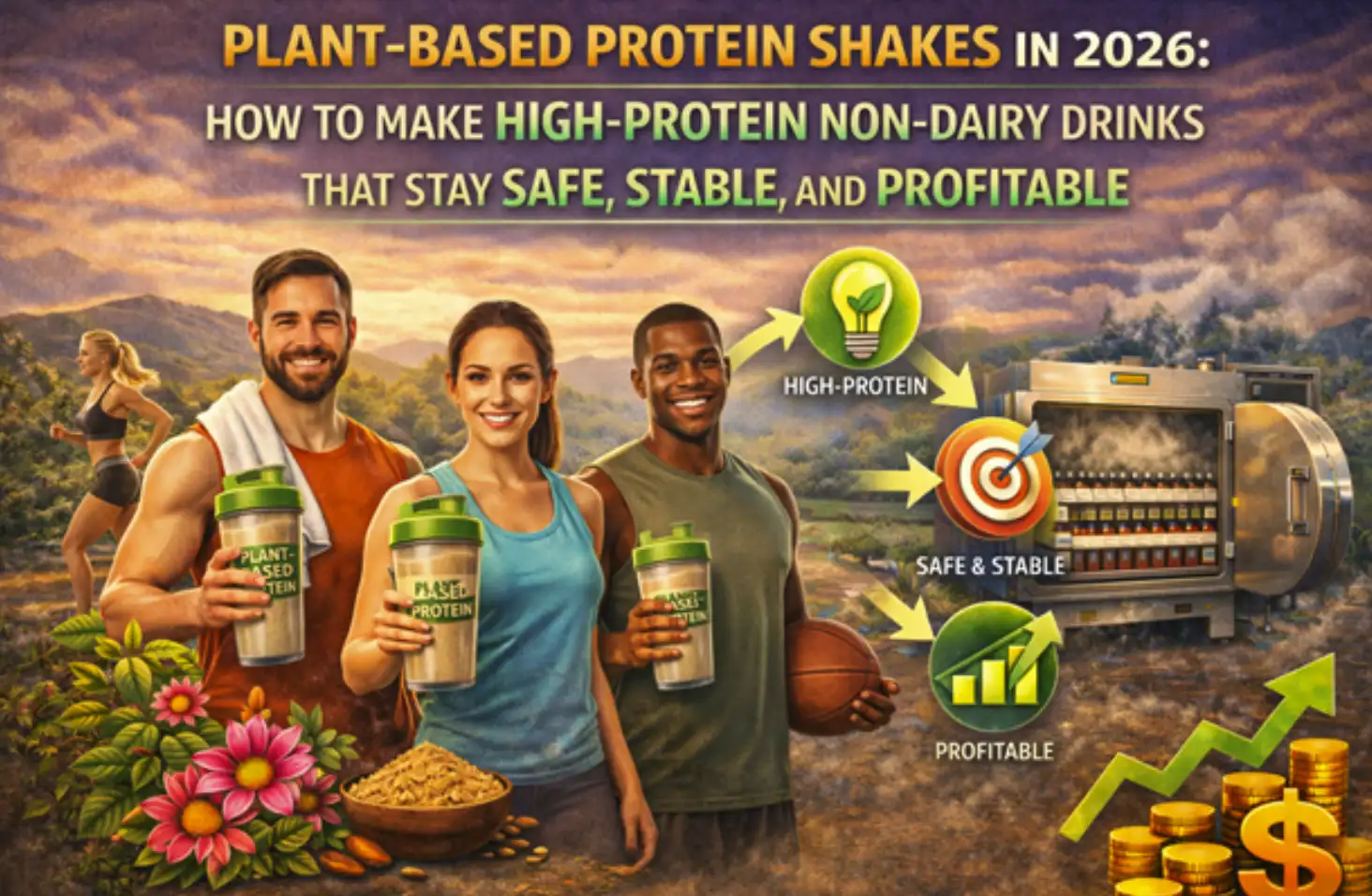
Plant-Based Protein Beverages in 2026: How to Make High-Protein Non-Dairy Drinks Profitable With Pasteurization
PRO Engineering / Manufacturing Inc.
This article is presented by PRO Engineering / Manufacturing Inc., a leading U.S. manufacturer of tunnel and batch pasteurization systems for the global beverage industry. With decades of experience designing energy-efficient, precision-controlled pasteurizers, PRO helps beverage brands safely scale production while preserving product quality, flavor, and functional integrity.
Table of Contents
Introduction
Plant-based protein shakes used to be a niche product. You’d find them tucked into a corner of a health food store, bought mostly by hardcore vegans or people with dairy allergies.
Today, they’re everywhere.
You see them at Costco, gas stations, gyms, grocery chains, and all over Amazon. People drink them for breakfast, after workouts, during travel, or instead of lunch when life gets busy.
But here’s what most consumers never see: these drinks are incredibly difficult to manufacture well.
A high-protein plant shake isn’t just flavored water. It’s a complicated mix of proteins, oils, fiber, vitamins, minerals, and stabilizers, all trying to behave nicely in a bottle for months at a time.
Without the right processing, the product can separate, spoil, turn gritty, or fail safety testing. That’s why serious beverage companies rely on specialized systems like those from
PRO Engineering / Manufacturing Inc, especially industrial Tunnel Pasteurizers that treat drinks after they’re sealed.
Why Plant-Based Protein Drinks Are Exploding
Demand isn’t growing by accident. Several big trends are pushing it forward at once.
More people are reducing dairy. Fitness culture is huge. Busy lifestyles favor grab-and-go nutrition. And older adults often need easy ways to increase protein intake.
Retailers also prefer shelf-stable products. They don’t require refrigeration, they last longer, and they can be shipped nationwide without special handling.
If your shake needs to stay cold and expires in a few weeks, many stores simply won’t carry it.
Why These Shakes Are So Hard to Manufacture
Plant proteins behave very differently from milk proteins.
Common sources include pea, soy, rice, oat, almond, or blends of several. Each has its own quirks.
Manufacturers deal with issues like:
Separation, Protein particles sink over time
Clumping, Poor mixing creates gritty texture
Heat sensitivity, Too much heat can ruin structure
Flavor problems, “Beany” or bitter notes can appear
Thickness, High protein makes liquids hard to heat evenly
In other words, you can’t just “cook it more” and hope it stabilizes. Temperature has to be controlled carefully from start to finish.
Real Food Safety Risks You Can’t Ignore
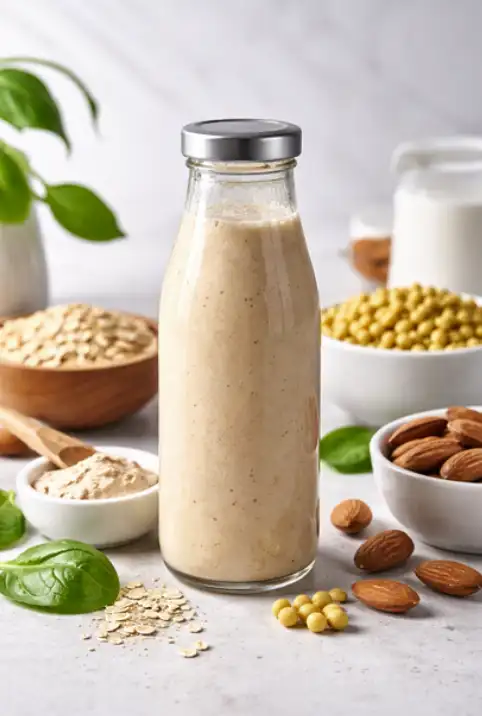
Plant ingredients come from farms, not sterile labs. Microbes can enter at many points along the supply chain.
Potential hazards include:
- Salmonella
- Listeria
- Spore-forming bacteria
- Yeasts and molds
- Contamination during filling
Protein drinks are especially risky because they’re packed with nutrients, exactly what microbes need to grow.
Tunnel pasteurization tackles this by heating the product after it’s sealed. That means contamination during packaging is addressed as well.
Industrial Tunnel Pasteurizers are designed specifically for this kind of packaged beverage safety.
How Tunnel Pasteurization Solves’ Shelf-Life Problems
A tunnel pasteurizer looks like a long-enclosed conveyor system. Sealed bottles or cans travel slowly through zones of controlled heating and cooling.
Think of it as a carefully planned temperature journey.
Key benefits include:
- Consistent treatment for every container
- Safety after packaging
- Shelf life often reaching 6–12 months
- Protection of flavor and texture
- High production capacity
Large operations producing millions of units per year typically use
Large Tunnel Pasteurizers.
Facilities with limited floor space often choose compact systems like
SlimLine Pasteurizers, which deliver industrial performance in a smaller footprint.
Tunnel vs. Batch: Which One Fits Your Business?
Both approaches work. The right choice depends on where you are in your growth.
Tunnel Systems, For High Volume
Best when producing large quantities of a consistent product.
Advantages:
- Continuous operation
- Lower cost per unit at scale
- Extremely consistent results
- Ideal for national distribution
Batch Systems, For Flexibility
Better for startups, pilot lines, or companies with many SKUs.
Advantages:
- Smaller production runs
- Easy formula changes
- Lower upfront investment
- Useful for R&D
Many brands begin with Batch Pasteurizers and upgrade later as demand increases.
Choosing the Right Pasteurizer Setup
There’s no universal solution. The best system depends on your formulation, packaging, volume, and distribution goals.
Simple products may run efficiently on
Single-Temp Pasteurizers, which use one consistent thermal profile.
Facilities producing multiple beverages often need adaptable systems such as
Triple-Temp Pasteurizers that allow different heating, holding, and cooling phases.
Most companies work directly with specialists like
PRO Engineering / Manufacturing Inc to tailor equipment to their exact product.
Table: PRO Pasteurizer Types & Best Uses
| PRO Pasteurizer Type | Best For | Key Advantages | Typical Users |
| Tunnel Pasteurizers | Packaged beverages at scale | Post-seal safety, consistent heating | Large beverage manufacturers |
| Large Tunnel Pasteurizers | Very high production volumes | Maximum throughput | Global brands |
| SlimLine Pasteurizers | Moderate volume, limited space | Compact footprint | Mid-size producers |
| Batch Pasteurizers | Small runs & testing | Flexible production | Startups & craft brands |
| Single-Temp Pasteurizers | Simple formulations | Efficient operation | Dedicated product lines |
| Triple-Temp Pasteurizers | Complex beverages | Precise multi-stage control | Advanced facilities |

Market Size, Market Share & Revenue Opportunity
Plant-based protein shakes don’t exist in a single market category. They overlap several fast-growing segments:
- Plant-based beverages
- Ready-to-drink (RTD) shakes
- RTD protein beverages
Here’s where the money is.
Current market size
- Global plant-based beverages: roughly $30B+ and growing
- RTD shakes: about $12B+
- RTD protein beverages: around $2B
Projected growth
- Plant-based beverages could exceed $70B by 2030
- RTD shakes projected near $18B by 2030
- RTD protein beverages expected to surpass $3B by early next decade
North America holds a large share of these markets, driven by convenience culture and strong retail distribution.
Why shelf-stable products win
Shelf-stable shakes dominate because they:
- Eliminate refrigeration costs
- Reduce spoilage losses
- Ship easily nationwide
- Last longer on store shelves
- Enable e-commerce growth
If your product can’t survive months at room temperature, scaling distribution becomes much harder.
Frequently Asked Questions
1. Are plant-based protein shakes safe without pasteurization?
Generally not for long-term storage. They require refrigeration and have short shelf lives.
Resource: FDA Food Safety, https://www.fda.gov/food
2. Does pasteurization damage protein quality?
Proper processing preserves nutritional value while ensuring safety.
Resource: USDA, https://www.usda.gov
3. How long can shelf-stable vegan shake last?
Most last 6–12 months unopened.
Resource: FoodSafety.gov, https://www.foodsafety.gov
4. What packaging works best for tunnel pasteurization?
Cans, glass bottles, and some flexible containers.
Resource: FDA Packaging Guidance, https://www.fda.gov/food
5. Is tunnel pasteurization better than UHT processing?
It depends on the product. Tunnel processing often preserves flavor better in certain formulations.
Resource: Institute of Food Technologists, https://www.ift.org
6. Can small brands afford industrial pasteurization?
Yes. Many start with flexible systems like
Batch Pasteurizers before scaling up.
Resource: https://prowm.com/blog/
7. Do plant proteins require different processing than dairy?
Yes. They typically need customized temperature profiles to prevent texture problems.
Resource: FAO, https://www.fao.org
REFERENCES:
WIKIPEDIA Links
Food processing
https://en.wikipedia.org/wiki/Category:Food_processing
Beverages
https://en.wikipedia.org/wiki/Category:Beverages
Food safety
https://en.wikipedia.org/wiki/Category:Food_safety
Conclusion
Plant-based protein shakes are no longer a niche trend. They’re becoming a core part of modern nutrition, from athletes to busy professionals to older adults looking for convenient protein.
But making these drinks safe, stable, and consistent at scale isn’t easy. High protein levels, plant oils, and complex formulations create real manufacturing challenges.
Tunnel pasteurization has become one of the most reliable ways to solve those challenges. It allows companies to produce beverages that travel well, last for months, and meet strict safety standards.
Whether a brand uses large continuous systems for mass production or flexible batch units for innovation, the goal is the same: dependable quality and the ability to scale without surprises.
In a market worth tens of billions, and growing fast, the companies that master both production and distribution will dominate shelf space.
Your partner for this is PRO Engineering / Manufacturing Inc. With over 40 years of experience designing and building custom tunnel and batch pasteurization systems, PRO brings world-class engineering right into your production floor. When you Partner with a PRO, you gain access to:
- Equipment engineered for your beverage’s specific formulation
- Systems that protect flavor, color, and shelf stability
- Hands-on support from installation through optimization
- Options that scale with your business
📞 Call PRO today: 414-362-1500 (PRO)
✉️ Email: sales@prowm.com (PRO)
📍 Address: 11175 W. Heather Avenue, Milwaukee, WI 53224 USA (PRO)
Whether you’re launching a new SKU or scaling national distribution, it’s time to Partner with a PRO and elevate your beverage quality and reliability.
ABOUT PRO ENGINEERING / MANUFACTURING INC.
Trusted | Knowledge | Quality
We have been involved in pasteurizers since 1977.
PRO Engineering / Manufacturing Inc. has developed a range of small, medium, and large-sized tunnel & batch pasteurizers to fit the needs of BrewMasters and Beverage Makers. When our customers asked for more compact as well as full-size tunnel pasteurizers, PRO developed models to fit our customers’ needs. Then our customers needed a batch pasteurizer. We now provide batch pasteurizers; PRO is a business that continually innovates to meet customer needs.
For more than 40 years, we have been delivering solutions for beverage product shelf stability and consumption safety.
Edward A. Michalski CEO
Ed Michalski started his career in the beverage industry by designing stainless steel, higher flow, spray headers for Pabst Brewing. Along with the header design he also developed a process to produce the new headers.
Ed, along with his brother David, formed PRO Engineering / Manufacturing Inc. Based on what they learned by re-designing and refurbishing other manufacturers’ pasteurizers, Ed and PRO started to offer the pasteurizer marketplace superior new pasteurizers. PRO Engineering / Manufacturing Inc. has been designing and manufacturing great pasteurizers for over four decades.
For more information on tunnel and batch pasteurization contact PRO Engineering / Manufacturing, Inc. at sales@prowm.com or call (414) 362-1500 and ask for Ed Michalski, CEO.
Partner with a PRO!… PRO Engineering / Manufacturing Inc.
Internal Resources:
